Every dealer eventually asks the same question: should we stock framed cabinets, frameless cabinets, or both? The answer depends on your customers, your installers and the styles that sell in your region.
The difference in one sentence
A framed (face frame) cabinet has a solid wood frame on the front of the box; the doors mount to that frame. A frameless cabinet has no front frame; the doors mount directly to the sides of the box.
Framed cabinets
- Look: traditional and transitional kitchens, Shaker doors.
- Strength: the face frame stiffens the box and keeps doors and drawers aligned.
- Door options: full overlay, partial overlay or inset.
- Market: the most common construction in the U.S.
Woodsland framed cabinets use a 1/2” plywood box with a solid wood face frame, soft-close hinges and dovetail drawers, in Shaker and Slim Shaker door styles.
Frameless cabinets
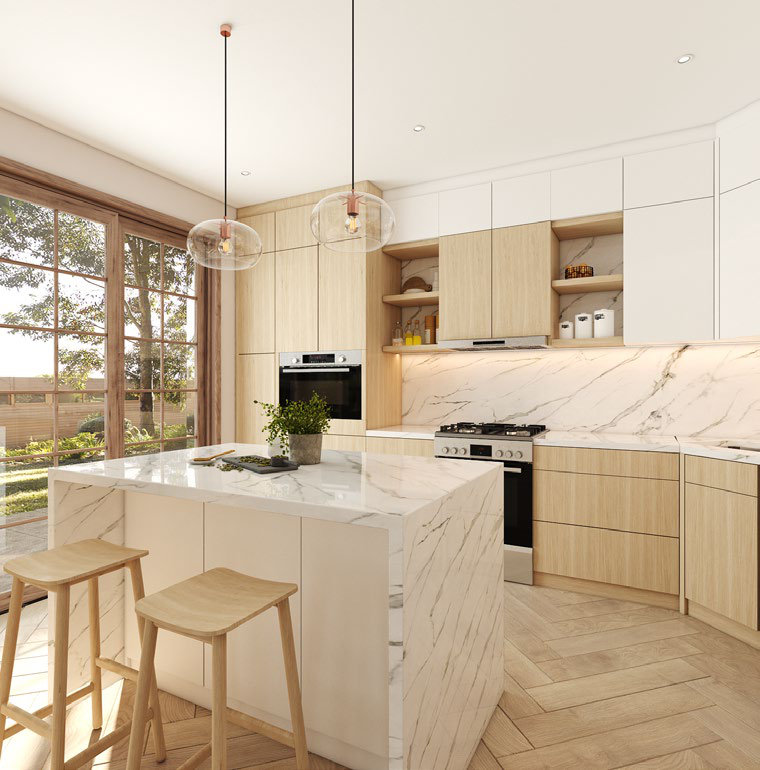
- Look: clean, modern kitchens, slab doors.
- Storage: no frame in the opening, so drawers and shelves are wider.
- Hardware: European concealed hinges and full-extension drawers.
- Market: growing in modern, multifamily and European-style projects.
See our frameless slab door cabinets.
How they compare
| Framed | Frameless | |
|---|---|---|
| Style | Traditional, transitional | Modern, minimal |
| Access | Frame narrows the opening | Full access |
| Installation | More forgiving on uneven walls | Needs square, level walls |
| Door styles | Shaker, raised panel, inset | Slab, flat panel |
Which should you stock?
- Mostly remodelers and traditional homes: lead with framed Shaker in two or three best-selling colors.
- Modern projects and multifamily: add a frameless slab line.
- Both: keep the color palette shared so one sample board covers both lines.
Not sure which mix fits your market? Talk to our team or compare our framed and frameless lines.